From Assistant to Lead: The Top Paraprofessional to Teacher Programs for 2026
Zen Educate Content Team
5
min read
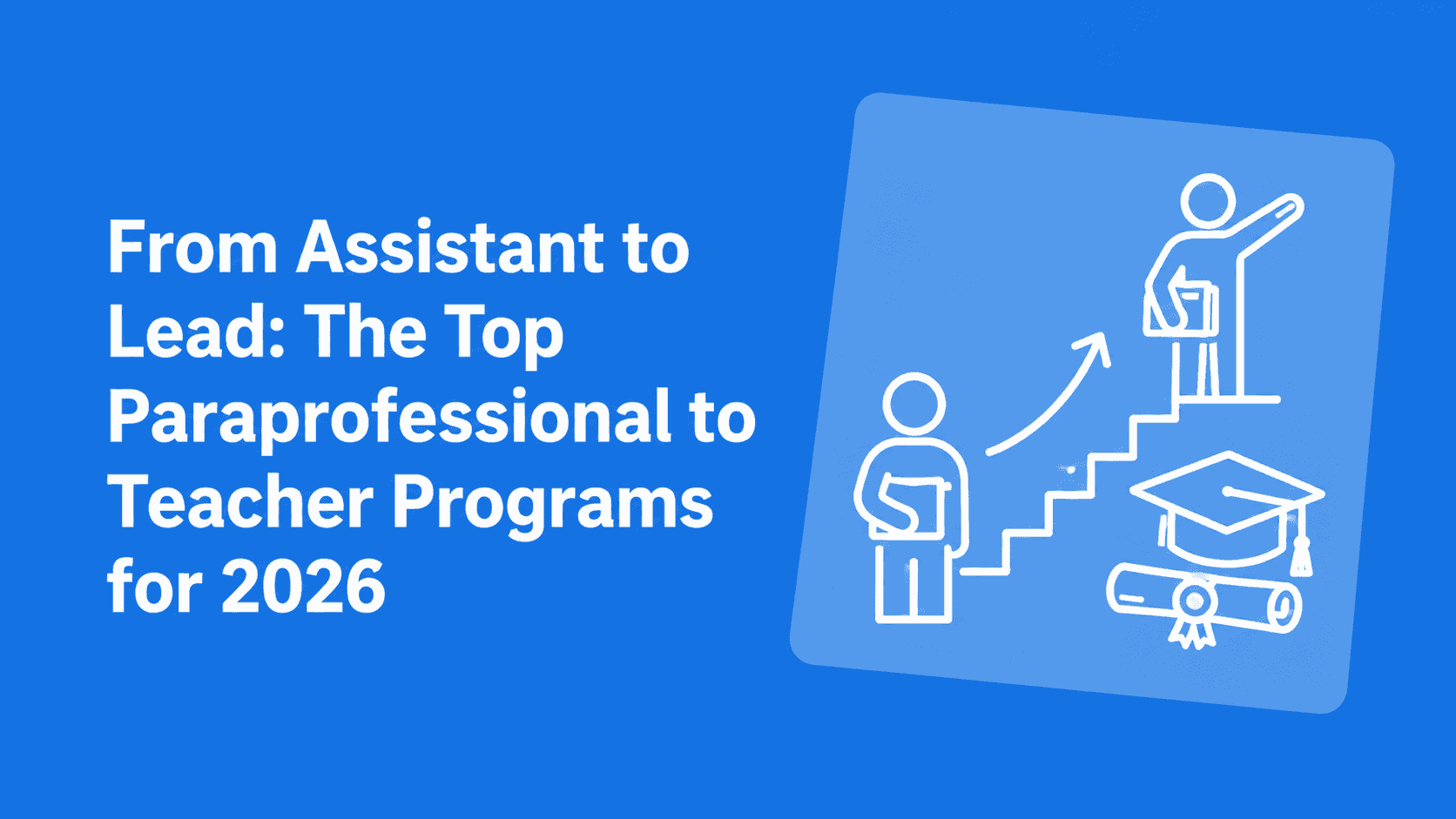
The classroom is changing, and in 2026, the demand for qualified, experienced educators has never been higher. For the thousands of instructional assistants, teacher aides, and support staff currently working in schools, the paraprofessional career path is no longer a "support-only" dead end. It has become the most strategic launching pad for becoming a lead teacher.
If you are a paraprofessional (often called a "parapro") looking to advance your career this year, you are in a prime position. School districts are moving away from traditional recruitment and are instead investing in "Grow Your Own" initiatives. This means the transition from paraprofessional to teacher is more accessible, affordable, and flexible than ever before.
Why 2026 is the Year for Educator Career Advancement
As we move through 2026, the educational landscape is facing a dual reality: a persistent teacher shortage in high-need areas like Special Education (SPED) and STEM, and a massive legislative push by the Department of Education to professionalize the support staff already in the building.
Teacher training in 2026 is focused on "Registered Teacher Apprenticeships." These programs, backed by federal and state funding, treat teacher preparation like a skilled trade. Instead of quitting your job to complete unpaid student teaching for free, you can now often earn a salary while completing your teacher certification programs.
Common Barriers - And How 2026 Programs Solve Them
Historically, paraprofessionals faced three major hurdles:
Cost: Tuition for a traditional education degree was often out of reach, with credit hours adding up quickly.
Time: Balancing a full-time job with classroom hours and coursework was nearly impossible.
Certification: Navigating complex state licensure requirements, GPA minimums, and eligibility criteria was a full-time job in itself.
Today, educator training programs are designed to be "work-based." States like California, Illinois, and Michigan have expanded state-approved teacher certification routes that allow you to use your current classroom hours toward your field experience and practicum requirements.
Top Paraprofessional to Teacher Pathways in 2026
Depending on your current education level, your path will likely fall into one of three categories:
1. Registered Teacher Apprenticeships (The "Earn While You Learn" Model)
This is the gold standard for teacher training 2026. Programs like the ones offered through the ESC of Central Ohio or the South Dakota Teacher Apprenticeship Program allow you to stay in your paraprofessional role, keep your benefits, and have your tuition covered by state or federal grants.
These registered apprenticeship preparation programs often accept candidates with an associate's degree or even those still working toward their bachelor of science in education, allowing you to complete your degree programs while gaining paid classroom experience.
Best for: Paraprofessionals without a bachelor's degree.
Key Benefit: Zero to low debt and immediate application of skills.
2. Alternative Teacher Certification (For Degree Holders)
If you already have a bachelor's degree in a non-education field, alternative teacher certification is your fastest route. In 2026, several high-quality providers offer accelerated paths with accreditation from recognized bodies:
Teachers of Tomorrow: A fully online teacher certification program available in multiple states with streamlined coursework.
American Board: A self-paced, non-credit-based route that can be completed in as little as 2–10 months, often leading to endorsements in high-need areas.
Moreland University (TEACH-NOW): A global, 9-month program that focuses heavily on digital pedagogy and student-centered learning.
These programs help educational professionals become certified teachers without returning to a traditional college of education.
3. State-Specific Paraprofessional Tracks
Many state universities have created "Para-to-Teacher" pipelines:
Georgia (Gordon State College): Their P2T track is a hybrid model designed specifically for working aides to earn a BSED in elementary education or special education. The program accepts community college transfer credits and allows you to apply your paraprofessional experience toward field experience requirements.
Massachusetts: The Paraprofessional Teacher Preparation Grant (with applications opening April 1, 2026, for the spring semester) provides massive financial aid to state residents working in public schools.
These degree programs recognize that paraprofessionals bring valuable classroom experience and adjust eligibility requirements accordingly, often accepting lower GPAs or offering college credit for prior work experience.
Strategic Planning: How to Transition Successfully
Moving from an assistant role to a lead role requires more than just a certificate; it requires a strategy.
Phase 1: The Foundation
1. Audit Your Credits
The Goal: Connect with an advisor to see how your existing AA or BA credits transfer.
Why It Matters: Many 2026 teacher education programs have "articulation agreements" with community colleges. This prevents you from repeating coursework and gets you into the classroom faster.
2. Verify State Approval
The Goal: Confirm that your chosen program is a state-approved route to licensure.
Why It Matters: You don’t want to finish a program only to find out it doesn't meet your state's specific requirements for a professional license.
Phase 2: The Practical Edge
3. Leverage Your Experience
The Goal: Build a portfolio showcasing your daily work with IEPs and behavior management across elementary or high school settings.
Why It Matters: Classroom experience is "gold" in the hiring process. Documenting your hands-on work turns your current job into a powerful resume builder for your future career.
Phase 3: Financial Strategy
4. Check for Grants
The Goal: Apply for the TEACH Grant or state-specific "High-Need" scholarships.
Why It Matters: If you are focusing on Special Ed or Math, there is a significant amount of funding available that you don't have to pay back, provided you commit to serving in high-need areas.
The Paraprofessional Advantage
You aren't a typical "student teacher." By the time you enter a teacher licensure program, you have already mastered the hardest part of teaching: classroom management.
Paraprofessionals in 2026 are often more "classroom-ready" than traditional graduates because they understand the nuances of student diversity, how different learners absorb material, and school culture. Whether you've worked in early childhood classrooms, provided support services to special education students, or assisted in general education settings, your experience gives you an edge.
When you transition, you aren't just starting a new job - you are elevating a career you've already begun. Many special education teachers started as paraprofessionals and found their niche working with students who need additional support.
For those considering advancing further, some preparation programs now offer pathways to a master's degree in specialized areas like secondary education or curriculum development, allowing you to continue growing throughout your career.
How Zen Educate Supports Your Journey
Advancing your career shouldn't mean sacrificing your flexibility or financial stability. Zen Educate serves as a vital partner for educators at every stage of their paraprofessional career path.
Flexible Placement: Need a role that aligns with your school schedule while you finish your degree? Zen Educate matches you with schools that value your growth.
Career Growth & Training: Beyond just job matching, Zen Educate provides access to professional development and advice to help you prepare for the next step.
Long-Term Strategy: Whether you are looking for long-term substitute roles to gain "Lead Teacher" experience or a stable paraprofessional position with a supportive district, our platform is designed to put the educator first.
Becoming a teacher is a marathon, not a sprint. In 2026, the "From Assistant to Lead" journey is the smartest route to a fulfilling, sustainable career in education.
Ready to take the next step in your teaching journey? Sign up for Zen Educate today to find flexible roles that support your certification goals and connect you with schools that invest in your future.
Zen Educate is transforming how schools find great teachers.
Search blog posts …
Search
Useful to Read





©
2026
Zen Educate